Week 2
Had a meeting with my supervisor to discuss using ‘jit.gl.slab’ as an alternative to non-slab jitter processes. The reason behind this discussion was that in both Jean François-Charles’ and Tadej Droljc’s projects they mentioned the processes they outlined (in regular CPU-based jitter operators) are all possible in GPU-based slab processes. They continue to explain that processing as much of the project in the GPU will increase the speed of the project as a whole, yet neither explore GPU-based slab processes in much detail.
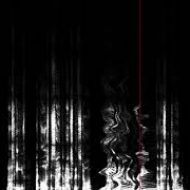
It is worth learning to walk before I can run though: CPU vs. GPU implementations will be something that becomes important when applying spectral processes, for now I have ensured that displaying the data in a traditional linear and logarithmically scaled spectrogram is the priority. When I first displayed DSTFT data in a ‘jit.pwindow’ it looked like this:
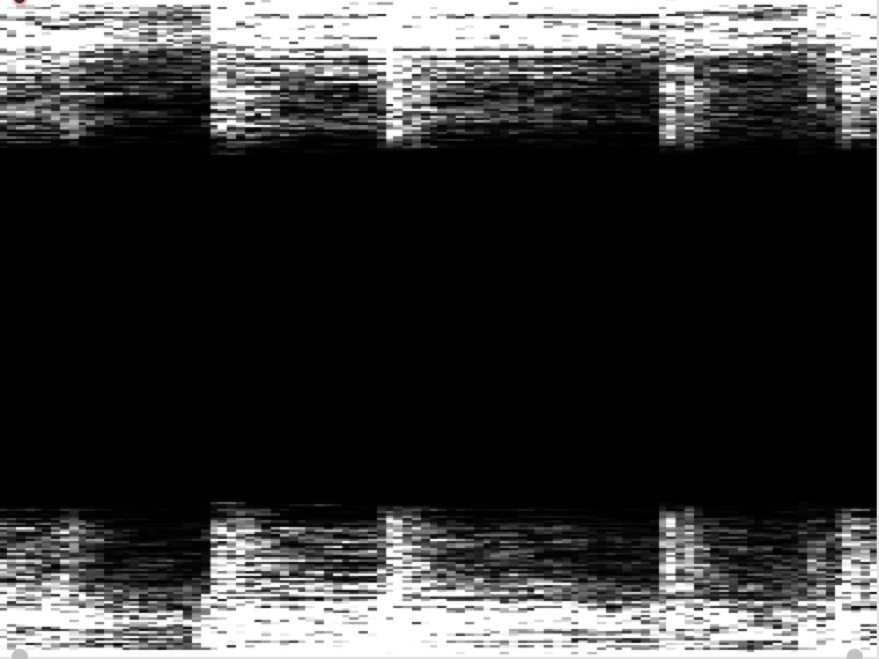
Clearly something wasn’t right, and I realised the issue was that I was packing the frame size with the number of frames and setting those as the dimensions of the jit.matrix, rather than packing the spectral frame size with the number of frames. Why this differentiation is important is explained in section ‘1.1 main’ of the project writeup, but essentially what is happening there is the DSTFT data is being mirrored about 0.5Sr (half the sample rate a.k.a the Nyquist frequency)
