Links to the project: The project page can be viewed here: cycling74.com/projects/the-fast-fourier-transform-and-spectral-manipulation-in-maxmsp-and-jitter-beta. The project and accompanying writeup can be downloaded here: drive.google.com/drive/u/0/folders/1N3dUL7PnYjGctg0fDBFfXSB87AcdSXO2. A YouTube video demonstrating sections 1.2.1 – 1.2.2, and 1.4.1 – 1.6.3 can be watched here: www.youtube.com/watch?v=U3hjo-Jnmms&feature=youtu.be. The GitHub repository can be viewed here: github.com/dwambyman/The-Fast-Fourier-Transform-and-Spectral-Manipulation-in-Max-MSP-and-Jitter-beta-.
Author archives: Jack Walters
Semester 1
Week 9 Welcome to the blog for my Creative Practice Music Project at the University of Edinburgh. This blog outlines the six month development of this project between October 2018 and April 2019. For an explanation of the mechanics the Fourier Transform and the code used, refer to the writeup that accompanies the project download. […]
Week 11 Over the past few weeks I have been investigating which equations will be relevant to the project I want to build. In the lecture notes for for MAFTDSP I came across the equation for DSTFT. While intimidating to look at at first, what this formula outlines is a process where a signal is […]
Christmas Break
While Jean François-Charles’ article is completely seminal in terms of its explanation of spectral processing once the user has acquired their DSTFT data, he does not explain how to collect that data in Max in the first place. This had always been the most mystifying part of the process to me, so over the last […]
Semester 2
Week 2 Had a meeting with my supervisor to discuss using ‘jit.gl.slab’ as an alternative to non-slab jitter processes. The reason behind this discussion was that in both Jean François-Charles’ and Tadej Droljc’s projects they mentioned the processes they outlined (in regular CPU-based jitter operators) are all possible in GPU-based slab processes. They continue to […]
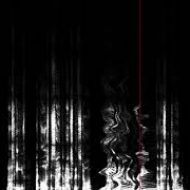
Week 3 Now that my linear spectrogram is functional, I am beginning to think about different ways in which I can visually render the DSTFT data. The world of Jitter seems almost like learning a new language in and of itself, and to attempt to navigate this I am currently looking through books 1, 2 […]
Week 4 The more I have considered what kind of project I want this to be, the more I realise that presenting a functional tool for the community is what I want to do. Rendering the data in a form similar to the two above images would lend itself to a project that was more […]
Week 6 I am starting to struggle with patch latency issues and investigating processing data in the GPU via ‘jit.gl.slab’. Investigating using Max’s shader .jxf files for ‘jit.gl.slab’. I am considering using an rendered external window to display spectrogram as there is less lag and exploring a way to be able to click on specific […]
Week 7 Both spectrograms are now being rendered in external ‘jit.windows’. Inside both of their respective mapping abstractions and the global ‘circleclickpoint_&_line_alphablend’ abstraction I have replaced mapping abstraction dimension inverting, colour inverting and the alphablend with openGL equivalents. I have also replaced all instances of the jit.matrix with ‘jit.gl.slab’ where I can. Objectives for the […]
Week 8 Going to abandon use of ‘poly~’: instead I will save the matrix contents in the ‘pfft~’ in ‘1.1 main’ as .jxf files, then set the project to load this file into each spectral effect when it is opened by the user. In the interest of CPU power, I have set the max sample […]