Week 3
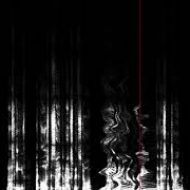
Now that my linear spectrogram is functional, I am beginning to think about different ways in which I can visually render the DSTFT data. The world of Jitter seems almost like learning a new language in and of itself, and to attempt to navigate this I am currently looking through books 1, 2 and 3 of Andrew Bensons’s Jitters recipes. The books are somewhat seminal in the Max community and touch on a lot of functionality Jitter can offer.
For readers interesting in spectral data rendering or rendering of any large data set I would recommend these ‘recipes’ in particular:
01 TimeScrubber
04 Asteroid growth
11 ScanMusic
12 TextureDistorter
13 VideoSynth
15 GestureRecord
21 SceneProcess
22 CatchNurbs
25 RagingSwirl
26 SubTitle
30 SoundLump
36 TinyVideo
Of the Jitter objects featured in these recipes, I am particularly interested in:
jit.coerce (change one matrix data type to another)
jit.repos (manipulate one matrix using another as a spatial map)
jit.gl.nurbs (renders a NURBS surface of any shape onto which we can map matrices (e.g. from a jit.gl.slab))
jit.dinmap (remap/ invert matrix dimensions)
jit.rota (quick 2D scaling and rotation of matrices)
jit.gl.isosurf (GL based surface extraction – investigate further)
jit.gl.mesh (create a geometric surface from a jit.matrix)
As I explore the capabilities for visualisation through jitter in my project further, a clear fork in the road is appearing ahead: do I opt for a large variety of malleability of rendering matrices in 3 dimensions (à la Andrew Bensons Jitter Recipes) at the sacrifice of control over the data, or the more simplistic two dimensional spectral processes with more possibility for user interaction that are outlined by Jean François-Charles and Tadej Droljc.
